单步正向反应预测
任务:给定一组反应物(reactants),预测最可能的产物(product)并排序。
SynOmega 的正向预测是逆合成单步模型的镜像:复用同一套 49,895 个反应模板与同一个 D-MPNN 模板分类器,只是在应用阶段把逆合成模板反转后用 RDKit 正向施加到反应物上。 它是模板法(template-based),可解释、与逆合成共享模板库;不追求 SOTA 端到端精度。
1. 模型 / 算法架构
flowchart TD
    R["反应物 SMILES<br/>A.B(多分子)"] --> G["图特征化<br/>保留全部 fragment + Gasteiger"]
    G --> M["D-MPNN 编码器"]
    M --> S["softmax over 49,895 模板"]
    S --> T["top-k 正向模板"]
    T --> INV["模板反转<br/>retro >> → 正向 >>"]
    INV --> A["RDKit RunReactants<br/>片段 permutation 填模板槽"]
    A --> F["Sanitize + 自由基过滤<br/>取最大有机片段"]
    F --> D["按 (max 模板概率, 产出模板数) 排序产物"]
编码器 D-MPNN(ForwardTemplateGNN,与逆合成共用权重):hidden_dim=300、
depth=3、dropout=0.1、读出 sum;模板分类头 head_hidden=600、head_dropout=0.2,
softmax 到 49,895 类;反应中心头 center_head_hidden=128(加载但正向排序不使用)。
原子与键特征逐项与逆合成完全相同(ATOM_FDIM=45 / BOND_FDIM=12,完整列表见
逆向页的"输入特征"一节)。与逆合成特征化的唯一区别:正向输入是多反应物集合,因此 _graph 不做
largest-fragment 裁剪——保留全部反应物 fragment(否则会丢掉第二个反应物),
并计算 Gasteiger 电荷。这一点由特征化开关 TGNN_KEEP_ALL_FRAGS=1 在训练侧保证,
与推理侧一致。
模板反转与正向应用(apply_template_forward):逆合成模板写作 product >> reactants,
按 >> 拆分后重组为 reactants >> product 即得正向反应;正向反应物侧允许多个模板槽。
把反应物拆成 fragment,用 permutations 枚举 fragment 到模板槽的有序指派,
RunReactants(..., maxProducts=1000) 生成候选产物。
自由基 / 卡宾伪影过滤
radius-0 模板正向施加时,RDKit 对欠价原子会补充自由基电子(例如
[C]=O 价 3),生成化学上不合理的卡宾/酰基自由基产物,而 RDKit 只拒过价、
不拒欠价。因此对每个产物强制 num_radical_electrons == 0 过滤,再取最大有机
片段、清 atom map、canonical 化,得到与真实产物同形式的 SMILES。
2. 伪代码
function forward_predict(reactants_smiles, top_k=10, topk_templates=10):
    g = graph_featurize(reactants_smiles)      # 保留全部 fragment + Gasteiger
    logits = DMPNN(g)                          # 忽略 center head
    probs  = softmax(logits)
    top_labels, top_probs = topk(probs, topk_templates)

    best = {}                                  # product -> [max_prob, n_templates, template_id]
    for (label, prob) in zip(top_labels, top_probs):
        retro_smarts = template_library[label]
        for product in apply_template_forward(retro_smarts, reactants_smiles):
            if product not in best:
                best[product] = [prob, 1, label]
            else:
                if prob > best[product][0]:
                    best[product][0] = prob
                    best[product][2] = label
                best[product][1] += 1          # 有多少个模板能产出该产物
    ranked = sort(best.items(), key = (-max_prob, -n_templates))
    return [ForwardPrediction(product, score=max_prob, template_id) for ... in ranked[:top_k]]

function apply_template_forward(retro_smarts, reactants_smiles):
    fwd_rxn = invert(retro_smarts)             # "L>>R" -> "R>>L",剥一层外括号
    frags = fragments(reactants_smiles)
    if len(frags) == 0 or len(frags) > 8: return []      # 病态输入守卫
    nslots = fwd_rxn.num_reactant_templates
    if len(frags) < nslots: return []
    outcomes = []
    for assignment in permutations(frags, nslots):       # 枚举片段→模板槽
        for product in RunReactants(assignment, maxProducts=1000):
            sanitize(product)
            if any_radical(product): continue            # 剔卡宾/自由基伪影
            outcomes.append(canonical_largest(product))
            if len(outcomes) >= 64: return dedup(outcomes)
    return dedup(outcomes)
排序直觉:一个产物继承"产出它的所有模板里的最大概率";概率相同的产物, 按"有多少个模板能产出它"降序(越多模板支持越靠前)。
3. 训练集
- 来源:与逆合成同一份原子映射反应语料,radius-0 / min-count 20,49,895 模板类。
- 规模:语料 15,809,108 条反应;正向任务实际可用约 13–14M 训练 / ~790K 验证 / ~790K 测试。
- 划分:按反应 id
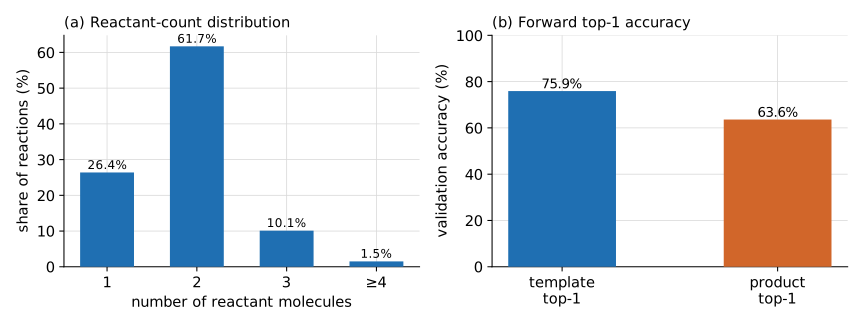
% 20——0 → test、1 → val、其余→ train(与逆合成同约定)。 - 反应物分子数分布(见下图):单反应物 26.4%、双 61.7%、三 10.1%、≥4 为 1.5%; 多分子(≥2)反应占 73.6%——这正是"保留全部 fragment"必须的原因。
训练超参:batch_size=256、epochs=50、AdamW、lr=1e-3、weight_decay=1e-5、
warmup_steps=2000、cosine、label_smoothing=0.1、grad_clip=5、混合精度、seed=42;
反应中心头 BCE、center_pos_weight=25。
4. 评测指标
在验证集上(id%20==1):
| 指标 | 数值 |
|---|---|
| 模板 template top-1 | 0.756 |
| 产物 product top-1 | 0.623 |
产物 top-1 低于模板 top-1,是模板法的结构性上限所致:即便命中正确模板,把它正向施加 到反应物上不一定唯一复现真实产物(区域/位点多解)。
只报有据可查的数字
验证集 top-5 / top-10、center F1、self-recovery 等指标本仓未落盘结果文件,故此处
不列,以免出现无出处的数字。软件测试对产物 top-1 设有回归下限断言
(product_top1 ≥ 0.55)。
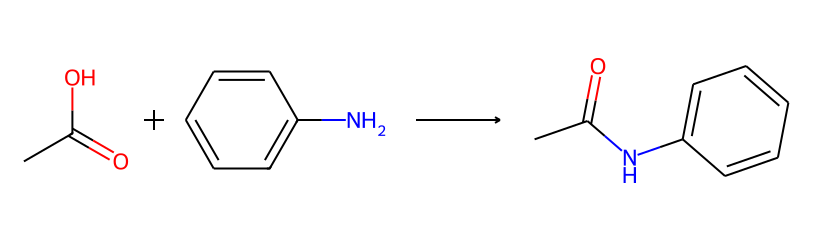
演示预测:一组 8 个例子里 top-1 命中 6、未中 2;两个未中都发生在单反应物输入上 (模型选错了切断位点)。下图是"酰胺偶联"的正向示意——羧酸 + 胺 → 酰胺:
5. 局限与定位
- 精度上限受"模板可正向复现产物"限制,非端到端 SOTA;价值在于与逆合成共享模板、 可解释、零额外训练(复用同一 checkpoint)。
- 跨分子的消息传递在 v1 未显式建模(分类头靠 sum 读出联合看到全部反应物); 长尾 logit 调整、虚拟全局节点等为后续方向。